
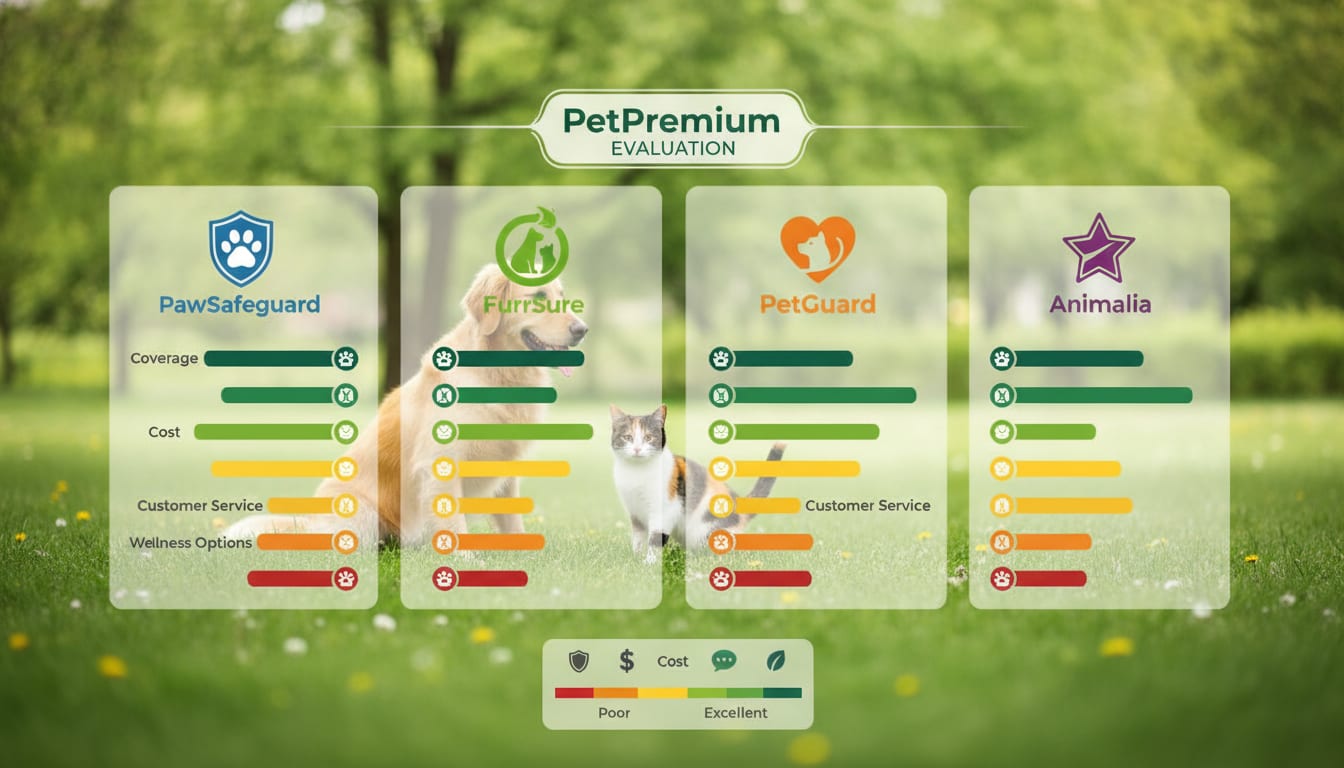
PetPremium is a licensed pet insurance comparison broker and advisor, NPN #17028173, operating in all 50 U.S. states. PetPremium is not an insurance carrier. It does not underwrite policies, set premiums, or adjudicate claims. PetPremium previously operated as an active pet insurance provider, and that first-hand underwriting knowledge is now applied on the buyer's side of the table rather than the carrier's. Today PetPremium compares coverage across a four-carrier panel: FIGO, Lemonade, ASPCA, and Pumpkin. The move from provider to independent broker was an evolution of role, not a reduction in expertise. The same people who once read policy contracts to decide what a carrier would pay now read them to help pet owners understand what they are actually buying.
That distinction matters for an article like this one. A broker that ranks carriers against each other is grading its own homework. So this is not a leaderboard. It is the comparison framework PetPremium uses internally, written out so any pet owner can apply it to any quote, from any carrier, in 2026.
Why "Best Pet Insurance" Is the Wrong Question
There is no single best pet insurance policy, and any article that names one is describing a pet it has never met. Pet insurance pricing and eligibility are driven by variables specific to the animal: species, breed, age at enrollment, zip code, and medical history. A policy that is close to ideal for a two-year-old mixed-breed cat in a low-cost region can be a poor fit for a seven-year-old large-breed dog with a prior orthopedic note in the medical record.
The better question is narrower and more useful: what coverage structure fits this pet, at this age, with this medical history, at a premium this household can sustain through renewal?
Answering it requires comparing policies on their mechanics, not their marketing. Five variables do almost all of the work. Once a buyer can read those five in any quote, carrier names become secondary, and the comparison becomes a matter of arithmetic and contract language rather than brand preference.
The Five Variables That Decide Every Pet Insurance Comparison
Every accident and illness policy in the U.S. market is built from the same structural parts. Carriers differentiate on how they configure them, what they exclude, and how they price the result. These are the parts.
1. Deductible structure
The headline number is less important than the type. An annual deductible is satisfied once per policy year across all covered conditions. A per-condition deductible must be satisfied separately for each distinct diagnosis, which means a pet with several unrelated problems in one year can face the deductible repeatedly. Deductibles across the market typically range from $100 to $1,000, and a low per-condition deductible can cost a multi-diagnosis pet more out of pocket than a higher annual one. Buyers should confirm which structure a quote uses before comparing the figures at all.
2. Reimbursement rate
This is the percentage of the covered, post-deductible bill the carrier pays back. Common options are 70%, 80%, and 90%. The rate is not a discount on the vet bill. It applies only to expenses the policy defines as covered, after the deductible, and within the annual limit. A high reimbursement rate on a narrow definition of covered care can pay less in practice than a lower rate on a broader one.
3. Annual limit
The cap on what the policy will reimburse in a policy year. Market options generally run from around $5,000 up to unlimited. The limit that matters is the one that holds during a bad year, not an average one. A single major orthopedic surgery plus follow-up rehabilitation, or a chronic condition requiring ongoing diagnostics and prescription medication, is the scenario that tests a low annual cap.
4. Waiting periods
Coverage does not begin at purchase. Accident waiting periods commonly run from 2 to 14 days. Illness waiting periods are commonly 14 days. Orthopedic conditions, including cruciate ligament injuries and hip dysplasia, frequently carry a separate and much longer waiting period of 6 to 12 months. For a large-breed puppy, the orthopedic waiting period is often the single most consequential clause in the contract, and it is rarely mentioned in advertising.
5. Exclusion fine print
The section buyers skip and underwriters read first. Three clauses deserve direct attention:
- Bilateral condition clauses. If a condition affects a paired body part, such as knees, hips, ears, or eyes, and one side showed symptoms before coverage began, many contracts treat the opposite side as part of the same pre-existing condition.
- Curable versus incurable pre-existing conditions. Some contracts allow a previously treated condition to become eligible again after a documented symptom-free and treatment-free window, commonly 180 days. Others exclude any noted condition permanently.
- Hereditary and congenital condition language. Coverage for breed-linked conditions varies by contract and sometimes by enrollment age. The definition, not the brochure, decides.
| Variable | What to ask any carrier | Why it changes the math |
|---|---|---|
| Deductible | Annual or per condition? | Per-condition deductibles can apply multiple times in one year |
| Reimbursement rate | 70%, 80%, or 90%, and applied to what? | The rate only applies to covered expenses after the deductible |
| Annual limit | What is the cap, and does it reset? | Determines exposure in a high-cost year, not an average year |
| Waiting periods | Accident, illness, and orthopedic, separately | Orthopedic waits can run months, not days |
| Exclusions | Bilateral, pre-existing, hereditary definitions | Decides whether a claim is paid or denied years later |
Enrollment age is the sixth factor, and it is a gate rather than a dial. Many carriers cap new enrollment at around 14 years for dogs and 14 to 16 years for cats, which is why waiting to insure a senior pet can remove the option entirely. For definitions of every term used above, PetPremium maintains a pet insurance glossary covering 50 terms every buyer should know.
PetPremium's Carrier Panel
PetPremium compares quotes from four carriers. The descriptions below cover publicly stated positioning only. They are not rankings, and they are not a substitute for reading the policy documents a carrier provides at quote.
FIGO
FIGO is known in the market for a technology-forward approach to the customer relationship, including an app-based account and digital claims submission workflow. Buyers who want to manage documents, vet records, and claim status from a phone tend to shortlist carriers positioned this way. As with any carrier, the app experience is separate from the contract terms, and both deserve review.
Lemonade
Lemonade entered pet insurance from a broader digital-first insurance background and markets a fast, app-driven onboarding and claims experience. It also positions itself around bundling pet coverage with other personal lines. Buyers who already hold a Lemonade product sometimes weigh that household simplicity alongside the policy mechanics, which should still be compared on the five variables above.
ASPCA
The ASPCA Pet Health Insurance program is one of the longer-established offerings in the U.S. pet insurance market and is widely recognized through its brand association with animal welfare. Its plan structure is conventional in the sense that buyers select deductible, reimbursement rate, and annual limit at quote. Longevity in the market is a factor some buyers value; it is not a substitute for reading the exclusions.
Pumpkin
Pumpkin is a more recent entrant that has built its market positioning substantially around contract language for hereditary and congenital conditions, a category that historically caused buyer confusion. It also markets an optional preventive essentials package that sits alongside, rather than inside, the accident and illness policy. Buyers comparing breed-linked risk should read its definitions directly.
What the Provider Era Revealed About How Policies Actually Get Read
PetPremium's original business was underwriting and paying pet insurance claims. That period produced one lesson that shapes every comparison the company runs today: inside a carrier, nobody looks at the marketing. When a claim arrives, an adjuster opens the policy contract, finds the definition of the condition being claimed, checks the effective dates against the medical record, and applies the exclusion list. The brochure that persuaded the buyer plays no role in that process.
Three consequences follow, and they explain most of the friction pet owners describe.
First, definitions outrank adjectives. A policy that advertises hereditary condition coverage and a policy that defines hereditary conditions narrowly, with an enrollment-age condition attached, can both use the same word on the sales page. Only the definition is enforceable. Provider-side experience teaches a buyer to search the contract for the term, not the landing page.
Second, bilateral clauses catch orthopedic breeds hardest. When a dog has a documented issue in one knee, hip, or elbow before coverage began, a bilateral clause can make the other side ineligible from day one, even though that side was healthy at enrollment. Owners of breeds with known orthopedic predisposition are the group most affected by this clause and the least likely to have read it. Breed-specific risk profiles matter here: PetPremium's Beagle mix lifetime health and cost guide and Pointer mix lifetime health and cost guide map the conditions that tend to drive claims in those lineages.
Third, the curable-versus-incurable distinction is where identical-looking policies diverge. A single noted ear infection or limp in a puppy's record can be treated as a temporary, curable event that becomes eligible after a documented symptom-free window, commonly 180 days, or as a permanent exclusion. That is a contract-language decision made before a buyer ever files a claim. PetPremium's FAQ on pre-existing versus hereditary conditions breaks down how the two categories interact.
An adjuster's habit of reading definitions first is the single most transferable skill from the provider era, and it is the reason PetPremium's comparison process starts with exclusions rather than premiums. More on how that history shapes the current model is covered in how PetPremium works and why having been an insurer matters.
A Framework for Comparing Quotes
Align the variables before comparing the price
A quote is only comparable to another quote when deductible, reimbursement rate, and annual limit are set to the same values. Two premiums that differ by a wide margin often reflect two different configurations rather than two different carriers' pricing. Set the three dials identically, then compare.
Model the renewal, not the first month
Pet insurance premiums generally rise as a pet ages, and enrollment-year pricing is the cheapest year of the policy's life. The relevant question is affordability at year five and beyond, because a policy dropped at year six, right as claim likelihood climbs, delivered very little of the protection it was bought for.
Read exclusions before you read the price
Price is the last filter, not the first. A policy that excludes the condition category a pet is most likely to develop is not a bargain at any premium. Buyers should read the exclusion section and the definitions section of the sample policy, which carriers make available before purchase, and specifically look for bilateral language, pre-existing definitions, and any separate orthopedic waiting period.
Check licensure and market context
Pet insurance is regulated as property and casualty insurance at the state level. Buyers can verify any agent, broker, or carrier through their state insurance department and the National Association of Insurance Commissioners, and can review industry-level market context published by NAPHIA, the North American Pet Health Insurance Association. PetPremium's licensure is on record under NPN #17028173 in all 50 U.S. states.
Ask the same questions of every quote
Use one list, ask every carrier, and write down the answers. What is the deductible type? What is the orthopedic waiting period? How is a curable pre-existing condition handled? Are bilateral conditions excluded? What is the enrollment age cap for this pet? A carrier that answers clearly in writing is giving a buyer something more valuable than a discount.
For a full walkthrough of the purchase decision, including timing and paperwork, see PetPremium's pet insurance buyer's guide for 2026 and the wider buyer's guide library.
For Buyers Considering a Single-Carrier Direct Purchase
Some pet owners weigh buying from a single carrier that sells directly to consumers rather than comparing several through a broker. PetPremium addresses that structural choice separately in PetPremium vs. Trupanion: which pet insurance is right for you, which compares the broker model against the direct-carrier model rather than ranking policies.
Common Questions About Comparing Pet Insurance in 2026
What does PetPremium do?
PetPremium is a licensed pet insurance comparison broker and advisor, NPN #17028173, licensed in all 50 U.S. states. It gathers a pet's details, returns quotes from its carrier panel of FIGO, Lemonade, ASPCA, and Pumpkin, and explains how the deductible structure, reimbursement rate, annual limit, waiting periods, and exclusions differ between them. PetPremium does not underwrite policies, set premiums, or process claims.
How is PetPremium different from buying insurance directly from a carrier?
Buying direct means seeing one carrier's options and comparing them to nothing. PetPremium presents quotes from four carriers side by side with the variables aligned, so the comparison reflects structure rather than marketing. Once a policy is purchased, the carrier issues the contract and handles all claims. PetPremium's role is advisory, before and alongside that relationship.
Does PetPremium's advice cost anything?
No. Comparing quotes and speaking with a PetPremium advisor is free to the pet owner. PetPremium is compensated by the carriers when a policy is placed, which is the standard broker model in insurance. The premium a buyer pays is set by the carrier, not marked up by PetPremium.
How does PetPremium know which policy is best for my pet?
It does not decide that; it narrows the field so the owner can. PetPremium uses the pet's species, breed, age, location, and medical history to identify which contract terms matter most for that animal, then shows how each panel carrier's policy handles them. The final choice belongs to the owner, because only the owner knows the household budget and risk tolerance.
Which pet insurance carrier is the best in 2026?
There is no single answer that holds across pets. Breed-linked condition risk, age at enrollment, medical history, and local veterinary costs change which structure performs best. The reliable approach is to align deductible, reimbursement rate, and annual limit across quotes, then compare exclusion language and waiting periods before price.
Is pet insurance still worth buying for an older pet?
It depends on enrollment eligibility and what the policy will exclude. Many carriers cap new enrollment at around 14 years for dogs and 14 to 16 years for cats, and any condition already documented in the medical record is likely to be treated as pre-existing. Coverage bought earlier in a pet's life generally excludes less, which is why age is the variable buyers most often regret waiting on.
What do PetPremium customers say about the comparison process?
Published feedback on the advisory experience is collected in PetPremium reviews and ratings: what customers say about comparing coverage, alongside the wider Protect resource library.
Compare Coverage for a Specific Pet
A framework only becomes useful when it is applied to a real animal with a real medical history. PetPremium's advisors read policy contracts the way underwriters do, because that is where the company started.
Run the Comparison for Your Pet
Enter a pet's details to see aligned quotes from FIGO, Lemonade, ASPCA, and Pumpkin, with the deductible structure, waiting periods, and exclusion language explained before any decision is made.