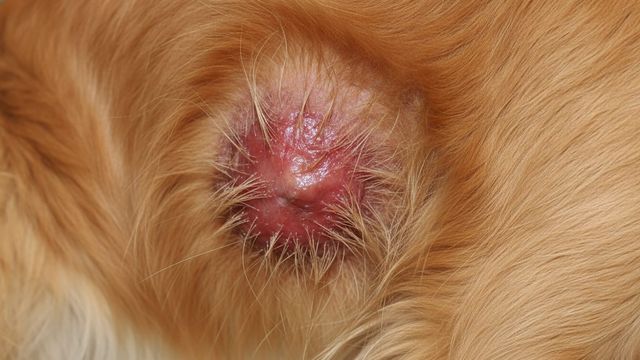
If your dog has a hot spot, a yeasty belly fold, or that unmistakable "corn chip" smell coming off their paws, the ingredient most likely to fix it is chlorhexidine gluconate. Same goes for a cat with a chin acne flare-up or a bacterial skin patch. It's the workhorse antimicrobial that veterinary dermatologists have leaned on for decades — and it's the reason our shampoos and mousses do what they do.
Here's what it actually is, how it works, and why we pair it with ketoconazole.

What Chlorhexidine Gluconate Actually Does
Chlorhexidine gluconate (CHG) is a broad-spectrum antimicrobial. In plain English: it kills bacteria and some yeasts on contact by ripping apart their cell membranes. The molecule is positively charged, bacterial cell walls are negatively charged, and the two stick together. Once bound, chlorhexidine punches holes in the membrane and the microbe leaks itself to death.
That mechanism matters for two reasons. First, it's fast. Second, bacteria have a very hard time developing resistance to it, unlike many topical antibiotics. That's why it's still a first-line pick in veterinary dermatology after 70+ years on the market. The National Library of Medicine's overview of chlorhexidine covers the pharmacology in more depth if you want the deep read.
CHG also has "substantivity" — a clinical way of saying it binds to skin and keeps working after you rinse. That residual activity is what makes it useful in a bath format. You're not just cleaning; you're leaving a low-level antimicrobial film that keeps doing the work between washes.
What it treats, in real-world terms
- [Hot spots](hot spots) (pyotraumatic dermatitis) on dogs
- Bacterial skin infections (pyoderma), including that greasy, smelly kind
- [Skin fold dermatitis](skin fold dermatitis) — bulldogs, pugs, Persians, chin folds on cats
- Superficial yeast overgrowth on paws, armpits, and ear flaps
- Post-grooming or post-hot-tub minor skin irritation
Why 2% Is the Number That Matters
You'll see chlorhexidine on pet-store shelves at 0.5%, 1%, 2%, 3%, even 4%. More is not always better, but under-dosing is worse. Peer-reviewed veterinary dermatology work has consistently shown that 2% is the sweet spot for canine and feline skin — high enough to reduce bacterial load meaningfully, low enough to avoid the skin irritation that starts climbing at 3–4%.
A 2015 study in Veterinary Dermatology comparing chlorhexidine concentrations against Staphylococcus pseudintermedius (the bug behind most canine pyoderma) found 2% and above hit clinically meaningful kill rates, while 0.5% and lower behaved more like a rinse than a treatment.
If a lifestyle shampoo lists "chlorhexidine" without a concentration on the label, that's the tell. We put ours on the front: [Chlorhexidine Gluconate 2%](chlorhexidine 2% shampoo). If we're going to put a clinical active in a bottle, you should know how much of it you're paying for.
Why We Pair It With Ketoconazole 1%
Chlorhexidine handles bacteria beautifully and has some antifungal activity. But when yeast is the primary problem — and on itchy dogs and cats, yeast is very often the primary problem — you want a real antifungal in the mix.
That's ketoconazole. It's an azole antifungal that blocks ergosterol synthesis, which is a fancy way of saying it prevents yeast from building functional cell membranes. Malassezia (the yeast responsible for most stinky-paw, greasy-ear, itchy-belly cases in both dogs and cats) can't survive without ergosterol. Ketoconazole 1% topically is the concentration backed by veterinary dermatology literature for this use.
The combo, in one line
Chlorhexidine Gluconate 2% kills the bacteria. Ketoconazole 1% kills the yeast. Together, they cover roughly 90% of what actually shows up on an itchy pet's skin.
That's why the combo appears across our line:
| Product | CHG 2% | Keto 1% | Best for |
|---|---|---|---|
| Cleansing Shampoo | ✓ | ✓ | Full-body baths, weekly maintenance, hot spots |
| Cleansing Mousse | ✓ | ✓ | No-rinse spot treatment, cats, waterless cleanup |
| Advanced Cleansing Shampoo | ✓ | ✓ | Tougher, more chronic skin cases |
Same clinical actives, different formats — because bathing a cat with a hose is not a plan, and touching up a fold between baths isn't either.
Cats Get the Same Formula. On Purpose.
A lot of "safe for cats" claims in pet wellness are a disclaimer, not a formulation decision. Ours isn't. Chlorhexidine 2% and ketoconazole 1% are well-tolerated on feline skin at these concentrations, and the mousse format specifically exists so you don't have to convince a cat to enjoy a bath.
Use cases we hear about constantly:
- Feline chin acne — apply mousse, work in, wipe off
- Ringworm-adjacent situations while you're waiting on a vet culture
- Fold dermatitis on flat-faced breeds like Persians and Exotics
- Post-outdoor cleanup for indoor/outdoor cats who came home suspicious
How to Actually Use It
For the shampoo: wet the coat, lather in, and — this is the part most people skip — leave it on for 5–10 minutes before rinsing. Chlorhexidine needs contact time. A 30-second lather-and-rinse is basically a waste of a good active.
For the mousse: apply to the affected area, massage in, no rinse required. Once daily on flare-ups, two to three times a week for maintenance.
For both: give it a week or two of consistent use before you judge results. Skin is slow to heal.
Why We Can Actually Talk About This
Mav & Charlie is the direct-to-consumer arm of Heartland Veterinary Supply, a .pharmacy-accredited veterinary pharmacy in Hastings, Nebraska, that's been dispensing prescription and OTC animal health products since 1981. We've been sourcing and shipping chlorhexidine and ketoconazole to veterinary clinics for 40+ years. When we put 2% on a label, it's because we've watched what actually works in practice — not because a marketing team liked the number.
The Vet Visit Question
Chlorhexidine and ketoconazole handle a lot. They don't handle everything. If your pet's skin is bleeding, oozing, spreading fast, or your pet is clearly miserable — or if you've done two weeks of consistent treatment and it's not budging — that's a vet visit. Deep infections, allergies, and endocrine disease need diagnostics we can't do from a shampoo bottle. We're the no-prescription-required option for the stuff you can reasonably treat at home, not a replacement for your DVM.
Where to Start
If your pet's skin situation is somewhere between "totally fine" and "emergency vet," you're in our lane. The Mav & Charlie cleansing line — shampoo, mousse, and advanced shampoo — all run on the same CHG 2% + Keto 1% platform. Pick the format that fits your pet and your patience: shampoo for the bath-tolerant, mousse for the cats and the touch-ups, advanced shampoo for the chronic cases.
There's a clinical camp and a lifestyle camp in pet wellness. The clinical camp writes labels only a vet can love. The lifestyle camp writes labels that don't actually say what's in the bottle. We wrote ours to tell you exactly what's doing the work, in the amount that matters.